Therefore, let us take a moment to unpack the workings of the Procure to Pay cycle and why its mastery holds significance.


Organizations depend on a seamless procurement-to-payment process to maintain a balance between operational efficiency, expenditure control, and vendor credibility. This end-to-end continuum encompasses everything, from the order to the final payment. Therefore, let us take a moment to unpack the workings of the Procure to Pay cycle and why its mastery holds significance.
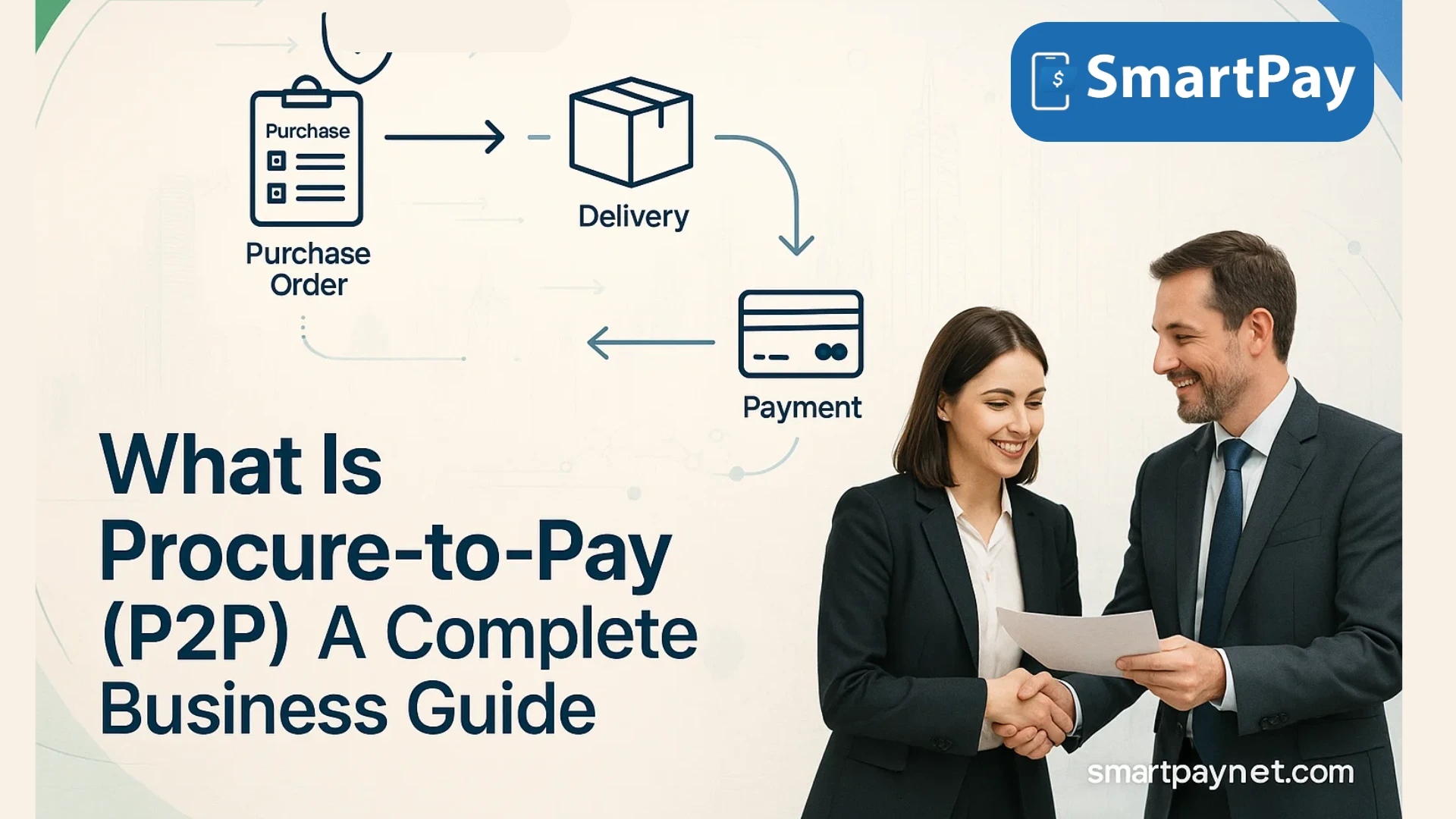
At its core, the purchase-to-pay sequence ensures that organizations can requisition needed items, respond promptly, and pay bills accurately.
Here is how an example Procure to Pay business process works:
| Steps | Explanation |
| 1. Need Identification | A team recognizes a requirement for goods or services. |
| 2. Requisition and approval | A purchase request has been raised and gains management approval. |
| 3. Sourcing and quotes | Suppliers are evaluated based on price, quality, and reliability. |
| 4. Issuing the PO | A formal order is made to the selected supplier. |
| 5. Receiving | Deliveries are matched against the purchase order for accuracy. |
| 6. Invoice matching | Aligning the invoice with a PO and receiving documents (three-way match). |
| 7. Payment execution | Approved invoices are paid under the terms of the agreement. |
| 8. Monitoring & Insights | Spend and vendor performance are analyzed for improvement. |
This Procure to Pay process provides the necessary traceability and compliance of each step-reducing errors.
With human hands, things are cumbersome and tedious as well as prone to mistakes. Automating makes the P2P process speedier and provides control functions. Digital platforms facilitate the approvals, matching of invoices, and triggering of timely payments.
As it goes in day-to-day operations, an employee raises a requisition, and procurement reviews suppliers and sends a PO, while receiving logs of the delivery. Accounts payable matches all documents, approves the invoice, and releases the payment, thus completing the procure-to-pay cycle loop.
Some readers ask: purchase-to-pay systems and purchase-to-pay software integrate to include the automated process from requisitioning to paying. Many have ERP tool integration.
It is vital when it comes to the p2p process in accounts payable for particular members in the finance department, as they supervise and approve supplier payment disbursements after the receiving section recognizes delivery.
P to P procurement really just means ” procedure-to-purchase,”; it means for everything else, the same chained process. The p2p systems are different for each. While others use broad ERP suites, some firms prefer niche tools such as Coupa or Tipalti for invoice automation.
Note: Whereas source-to-pay flow encompasses diselection and evaluation of supplier sources, the P2P process, by contrast, is essentially transactional, receiving, invoice matching, and disbursement. In doing so, IBM automated P2P, which enabled onboarding of suppliers at rates of 10-15 times faster while also slashing the timeframe for price analysis down to a few minutes rather than two days. That’s due partly to entering smart technologies such as AI, RPA, OCR, and linkages with financial systems, thereby making the purchase-to-pay cycle smooth and strategic.
However, P2P systems do not lack challenges regarding efficiency since they can create some operational risks when optimized poorly.
Common challenges include:
To tackle them, organizations now turn to AI-based applications, mobile-friendly interfaces, and customizable dashboards for instant visibility.
Following these best practices, organizations can achieve a truly smooth flow:

This provides clear-cut templates and forms to be used for requesting goods and services by teams, thereby speeding up approval and curtailing confusion.
No posting will be made if there are no orders under the new provision.
By comparing PO, invoice, and goods receipt, one can detect discrepancies and associated fraud risks. You have trained on data until October 2023.
One platform for vendor contacts, payment terms, tax forms, and banking info reduces duplication as well as compliance issues.
Random or periodic checks may reveal leakages, most likely from duplicate payments or inactive vendors.
The platforms are currently quite intelligent, automated, and agile. Here are some of the trending technologies:
Your selection of the right solution would be based on the size of your company, the industry that you are in, and your integration needs. The following are the things that need consideration:
Typical solutions of this type include SAP Ariba, Coupa, Oracle Procurement Cloud, and Tipalti.
Sabre-to-sabre process-from Request to Entire Disbursement-makes clear the way to financial insight, operational agility, and supplier confidence. Well-designed tools and workflows can convert what is most frequently a disjointed system into an efficient, strategic engine. Smart Payment readers will find the payback on their investment in purchase-to-pay systems because it speeds the process of approvals, tightens compliance, and improves cash flow-all without added effort.
1. What is the P2P process?
The P2P process is the supply chain from requisition until selection of a supplier, and covers steps such as sourcing, requisitioning, receiving, matching invoices, and disbursement.
2. What are the differences between procurement‑oriented P2P and accounting‑oriented P2P?
P2P in procurement covers sourcing and ordering, while P2P in accounting is designed to ensure invoices reach accounts exactly as budgetary provisions require payment.
3. How do they cut down considerably on costs for businesses?
The very process undercuts expenses by automating approvals, fragmenting better spend visibility, increasing speed and error transparency, and offering effective ways to negotiate on the basis of evidence‑based spend.
4 . What are the advantages of purchase-to-pay software solutions?
Their destructible disposal policy against leviation anywhere, real-time analysis, and improved supplier relations through timely payments.
5. Can both p2p process be implied interchangeably, regardless of the naming, due to commercial practices?
Yes. Purchase-to-pay is a synonymous term to Procure to Pay; it is seen as synonymous. Both describe a cycle from recognizing benefit to recognizing an invoice, although they may vary according to platform or author.
