Smart payment systems ensure that every payment is adequately equipped with reliable smart modern shielding technological means.


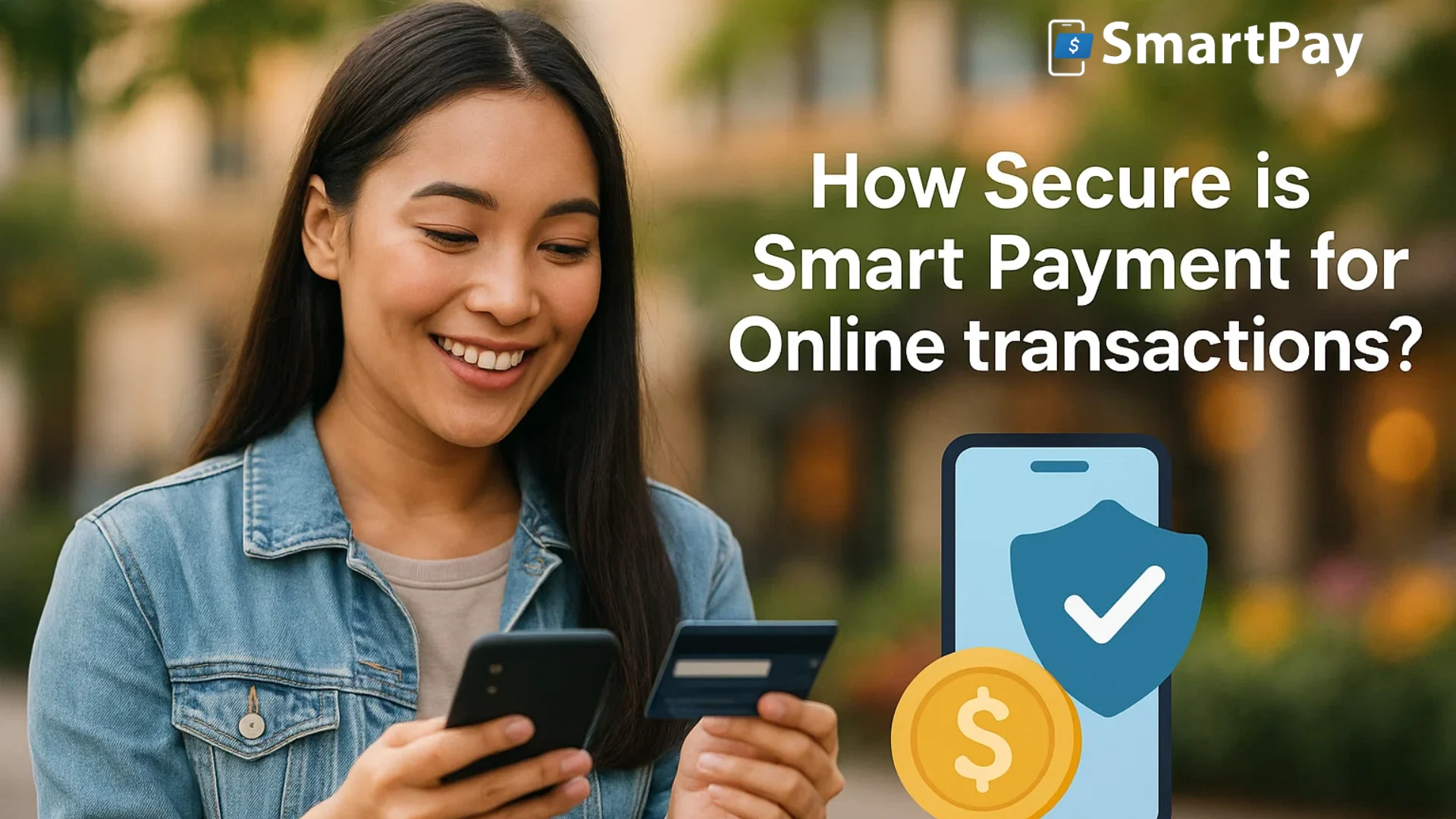
It’s not just important but necessary to safeguard monetary data in today’s digital age. Digital Payment was developed to make vibrant, Safe Payments possible for every transaction. It doesn’t matter if one is shopping online or making payments through a site; Smart payment systems ensure that every payment is adequately equipped with reliable smart modern shielding technological means. We are here to discuss how Digital Payment works, the different features that set it apart, and why it is one of the most trusted secure payment systems in the market today.
With increased online fraud and various cyber threats, people want highly security online payment systems. A single breach in data can lead to:
Such standards of complete security have crossed over to the Digital Payment company.
It is a great practice to provide several protection formats against data, rather than just one, to garner complete trust from customers while sealing information.
Digital Payment employs some of the strongest encryption protocols on the market today to ensure that all sensitive data is transmitted between the user, merchant, and financial institution without risking protection. This means that the information is converted into an unreadable format as it travels across the internet, making it impossible for hackers or unauthorized third parties to decipher the data-even if they manage to get their hands on it. The only person who can read the original information is the intended recipient, who has the correct decryption key.
In addition to this, Digital Payment has developed different tokenization between transactions that replace the actual card details with a newly generated token as a whole, unique, and hard-to-guess random number. Thus, the actual card number is never captured or sent during transactions. Even if a token is intercepted or stolen by a cybercriminal, it is of no use without the system or context that created it. Tokenization thus stands strong in significantly reducing the chances of data breaches and adds cutting-edge armor against fraud.
Digital Payment effectively utilizes Multi-Factor Authentication for verification purposes beyond what a username and password can offer. For example, users may have to input an alphanumeric code which is sent to their mobile by SMS, have to approve a notification sent to a secured mobile application, or even biometrically authenticate using at least one of fingerprint or face scan. With multiple forms of verification in place, it is hard for hackers to gain unauthorized entry, even with knowledge of the login credentials.
Thanks to machine learning and behavioral-analytic artificial intelligence, Seamless Payment now has a continuous real-time insight into every transaction. An individual’s typical behaviors are learned and adapted to generate alerts on events that deviate from the established profile. Thus, flagging or blocking suspicious activities, such as purchases that come from peculiar geographical locations, high transactions in a short period of time, or transactions that exceed some predefined limits, would trigger the alert, and further authentication would become necessary before actions could be confirmed.
Seamless Payment is operating according to the Payment Card Industry Data Security Standard (PCI DSS), which defines the requirements for keeping credit card information secure when being processed, stored, or transmitted. Adhering to these standards implies the platform is standing strong on its security controls, goes through an audit regularly, and practices safeguarding cardholder data down to the tiniest details while eliminating vulnerabilities.
Regarding the additional level of protection of online card transactions, Seamless Payment supports the most recent protocols of 3D Secure 2.0. The importance of this security feature lies in its power to initiate an additional authentication step whenever required, especially for high-risk or abnormal transactions. Compared to the previous version, 3D Secure 2.0 is prone to offering an amicable experience, allowing users to authenticate by providing biometric data or using an app to confirm a transaction within an unbroken security framework.
At its very essence, Seamless Payment means a Safe Payment gateway, which is an effective intermediary that provides the secure passage of payment information among the customer, merchant, and banking authority during any such transaction. The gateway encrypts the payment data and uses secure protocols to eliminate the risk of exposure of sensitive information such as card numbers and authentication tokens. Apart from performing a key role in enabling fast and reliable payments, this robust infrastructure for the payment gateway also acts against fraud or cyberattacks.
| Feature | Functionality |
| Encryption | protects cardholder data in transit |
| Tokenization | Replace the card data with secure tokens |
| Fraud Prevention | Identifies anomalous behavior to prevent fraud |
| Multi-Factor Auth | More than just a password |
| Meets PCI DSS Standards | Globally accepted standards for secure handling of card data |
| Secure Gateway | controls the transaction between the merchant, the bank & end-user |
| 3D Secure 2.0 | An extra step in authenticating cardholder identity |
| P2PE | Ensures encryption of card data before leaving the device |
| Data Storage Protection | Encrypted storage of tokens/ credentials |
A Seamless, secure services payment system protects you in more ways than one. It also brings peace of mind, boosts conversion rates, and enhances customer relations over time.
All customers are happy about using secure payment systems and generally buy more and come frequently again.

However, there are a lot of payment providers on the wall. Why, then, choose Seamless Payment?
By choosing Advanced Payment, you have decided on a secure payment system built to scale with your needs.
Setting up Advanced Payment will be easy:
Advanced Payment gives you a way to place payments with confidence and ease, whether you’re a small store or a full-fledged e-commerce brand.
Common threats that Advanced Payment helps protect against include the following:
| Threat | Smart Payment’s Response |
| Phishing | MFA and fraud filters stop account takeovers |
| Skimming | Tokenization replaces card data, exposing nothing usable |
| Man-in-the-middle | End-to-end encryption keeps data unreadable |
| Credential Stuffing | Behavioral analytics highlight login abuse |
| Fake Checkouts | Strong gateway verification and domain verification stop impersonation |
| Insider Attacks | Working on a need-to-know basis, role-based access offers no internal visibility into the system |
Together, these ensure Safe Payment every time.
Aside from cushioning payment, that is where Advanced Payment truly shines- in its flexibility. Whether you want to provide mobile wallets, credit cards, or ACHs, the platform is up to that. It works over any device and browser and supports all major world currencies. Retailers service providers, and digital platforms also trust this secure payment method. Advanced Payment keeps secure its every part from the moment a customer hands over their card data to the time their funds reach your account.
While Smart Payment does all the heavy lifting, you should also keep doing the following:
Advanced Payment merely provides payment processing. It emits more than that, however. It’s going to be your partner in your mission to conduct a safe, compliant, and trustworthy business. Smart Transaction encapsulates the best tools for peace of mind, all-around, for you and your customers. Progress continues at Smart Transaction, which means it has never been static but keeps improving. That’s why it has proved to be reliable for most businesses when it comes to secure payments online.
What is the best way to make a secure online Smart Payment?
Choose a provider such as Smart Payment, which offers encryption, tokenization, and fraud checks.
Can I offer secure online Smart Payments to international customers?
Yes. Smart Payment Transaction fully supports international transactions and is compliant and secure.
How does Smart Payment compare with other Safe Payment systems?
Contactless Payment offers similar tools, such as real-time fraud detection and 3D Secure, while usually presenting a stronger value proposition.
How can Safe Payment methods be implemented easily?
Implement Contactless Payment APIs or plug-ins that seamlessly integrate with your e-commerce platform.
Is Smart Payment a secure solution for online payment?
Yes, absolutely. It has been built with industry-grade encryption and is monitored continuously.
