Explore 2025 cross-border payments—AI, blockchain, CBDCs & gateways driving faster, cheaper, and transparent global transactions.


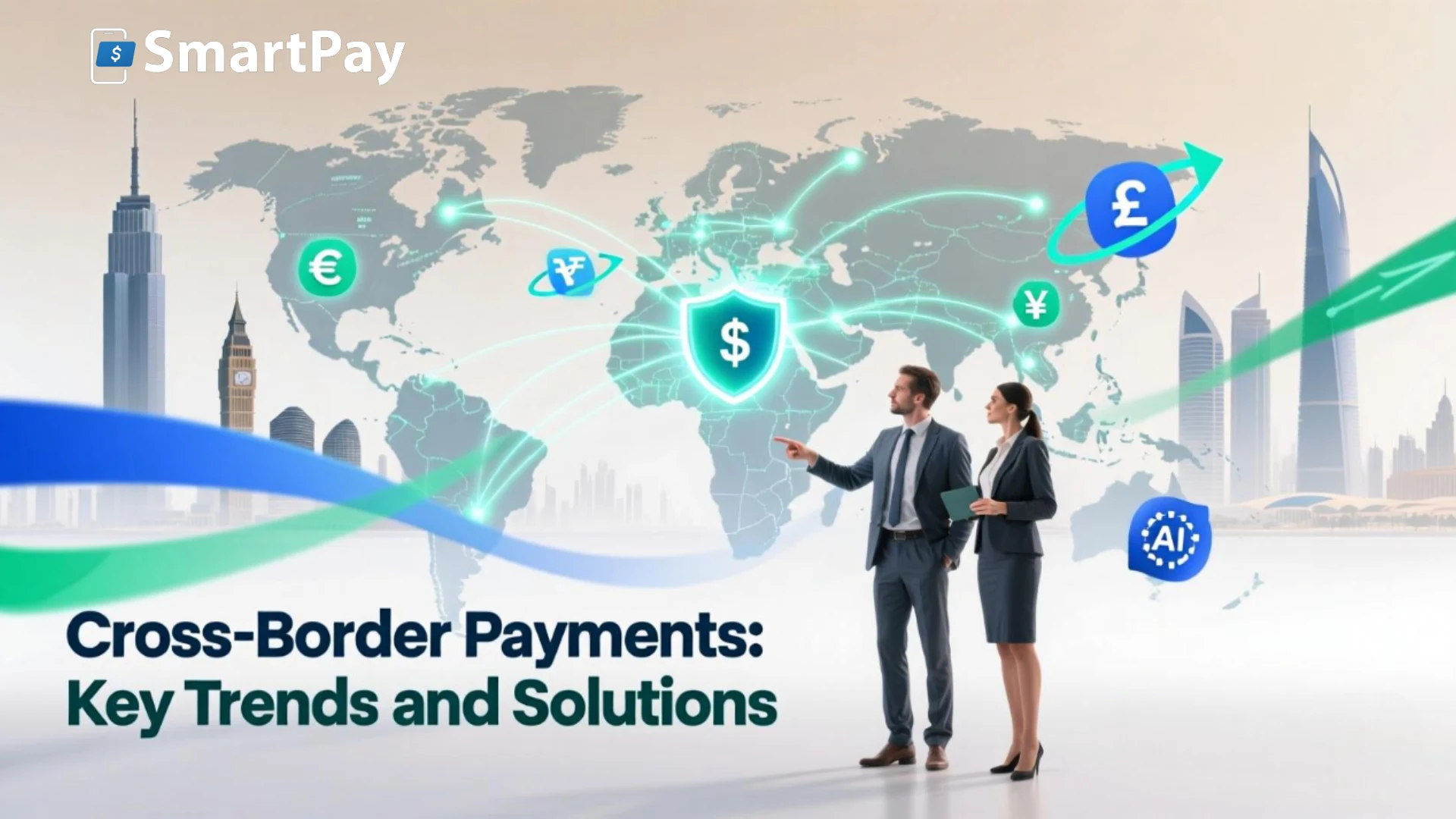
Global borders have witnessed a significant growth in cross-border payments in recent years, signifying the most favourable, fast, and transparent ways through which value can be moved across and between borders. Unfortunately, businesses and individuals continue to face high costs, lengthy transfers, and hurdles in the laws and regulations governing international payments. It mentions analyzing the new cross-border payment companies, the developing international payments solutions being worked on, the changing international payments process, and how gateway solutions are transforming this entire ecosystem. Let us look into the categories, kinds of opportunities, and hurdles today for smart modern trade.
Speed vs Cost: A Comparison
| Rail | Time | Cost | Best Suited For |
| SWIFT | 1-5 days | 25-50 (bps) | Large corporates |
| Blockchain (USDT, XRP) | 1 hour | ~1% | Crypto-native firms |
| UPI-PayNow (India-SG) | Instant | < 1% | SMEs, freelancers |
This table reflects modern trade-off dynamics in the cross-border payments companies ecosystem.
Trickling down the list of hidden costs, charging a high price for FX markups, correspondent fees, and opaque pricing. For example, paying over $300 for a $10,000 bank transfer from the US to India
Old rails like SWIFT take 2-5 days and are rendered slower with consideration for time zones and bank cut-offs.
Slowdown in transfer due to multiple checks for KYC, AML, and sanctions of e.g., OFAC, EU lists.
Rates that go up and down diminish value between the time sent and the time of settlement.
Another burden: lack of transparency, antiquated standards, and fractured systems-everything adds friction.
Contrary to traditional technologies in international payments and gateways, new emerging solutions are aiming to directly counter these challenges:
Multi-CBDC platforms like BIS Bridge and Dunbar trials enable direct digital currency settlement on shared infrastructure. Digital wallets are fast becoming a global issue. PayPal would like to see no interruption in the wallets’ border flow to add to connectivity. In China, digital yuan usage is being promoted in over 30 countries around the transboundary.
Things to consider before selecting a gateway:
So, all these features reduce the friction and create confidence in senders and receivers.
Platforms like Upwork or Fiverr now depend a great deal on modern cross-border payment systems for paying international freelancers. Quick payouts in local currencies without hefty bank fees through gateways like Wise, Payoneer, and Deel.
Acceptable gateways that facilitate payment by buyers from different countries for the sale of goods provided by e-commerce sellers on different platforms like Amazon, Etsy, or Shopify have been integrated within them, intended for cash out in local currency. Hence, there will be no double conversion cost variations and delays.
Digital invoices and programmable money are now making traditional supply chains obsolete. Once goods arrive and are digitally confirmed, the payment is automatically released, eliminating trust issues.
Payments fail, or charge high FX markups for students paying tuition fees abroad and SaaS users paying for subscriptions. Smart routing, local currency billing, and recurring payment tools make the path smoother.
The largest chunk of global transfer is family remittances. Traditional players such as Western Union or Remitly are experiencing competition from blockchain wallets that offer instant, low-cost transfer solutions.
While innovation may evolve, corresponding regulatory developments enforce anti-money laundering and anti-fraud, and anti-terrorism financing tasks.
Key regulatory shifts include:
This helps confer legitimacy to newer rails that blockchain represents while allowing traditional actors to modernize within a reasonably derisked environment.
From here, we proceed to an explanation of the underpinnings of modern platforms that support cross-border transaction flows:

| Layer | Description |
| Payment Orchestration | Management of routing between various PSPs or banks. |
| Currency Conversion | Uses live FX feeds or rate-lock tools. |
| Risk and Compliance | Integrated KYC/AML modules via AI or third-party APIs. |
| Settlement Engine | Supports batching, pre-funding, and real-time rails. |
| Reporting and Analytics | Custom dashboards for merchants and regulators. |
Such modules enable companies to set up highly customizable e-solutions and provide a competitive advantage against other players in the industry.
Five platforms will set the pace for transborder payment companies in 2026:
Each of these has tools catering to different segments of freelancers, e-commerce, corporates, etc.
AI is changing the real-time way payments are processed and managed:
The learning from pattern mechanism of AI is a perfect fit for building security and efficiency in a fast-paced ecosystem.
Environmental, Social, and Governance (ESG) considerations are becoming increasingly important in global payments, with more businesses calculating the carbon footprint of their financial operations, including cross-border money flows. Emerging payment systems are helping reduce environmental impact by operating on energy-efficient networks such as Solana and Algorand, while also improving transparency across remittance sources and payment channels. These systems can support broader financial inclusion by expanding access for unbanked and underserved populations. Integrating ESG metrics into payment flows is not only an ethical and sustainability-focused strategy but also an increasingly attractive factor for investors and customers who prioritize responsible business practices.
International organizations and financial institutions are accelerating collaboration to improve interoperability across global payment infrastructures. Several major initiatives are shaping the future of borderless payments:
Together, these initiatives aim to create smoother, faster, and more transparent cross-border transactions across diverse payment systems and regulatory environments.
Cross-border payments, even as they begin to transition away from slow and costly transfers in favor of dynamically tech-led rails, have seen their prospects revitalized in 2026. Use of blockchain, AI, CBDC, and other flexible gateway solutions empower stakeholders in dealing with complexity while enabling free-flowing global value transfer.
Q1: What makes Overseas payments costly and slow?
The more middlemen you have, layers of foreign exchange margins, compliance checks, and fragmented systems, all slow things down and add to the cost of settlements.
Q2: How do international payment solutions cut costs?
Using blockchain, AI-routing, and CBDCs, the gateways reduce costs, speed up delivery, and enhance transparency.
Q3: What role do Overseas payment companies play?
They unlock transfers internationally with multi-currency wallets, FX locks, and direct access to rails like UPI or Pix.
Q4: Are cross-payment methods, e.g., voice and programmable contracts, helpful?
Yes, voice commands and smart contract triggers enable hands-free, conditional transfers, eliminating several manual steps and reducing risk.
Q5: Is regulation keeping pace with the emergence of such models?
It is evolving. Initiatives like ISO 20022 adoption, BIS APIs, and sandboxed pilots of CBDCs are in place to help align frameworks with innovations.
